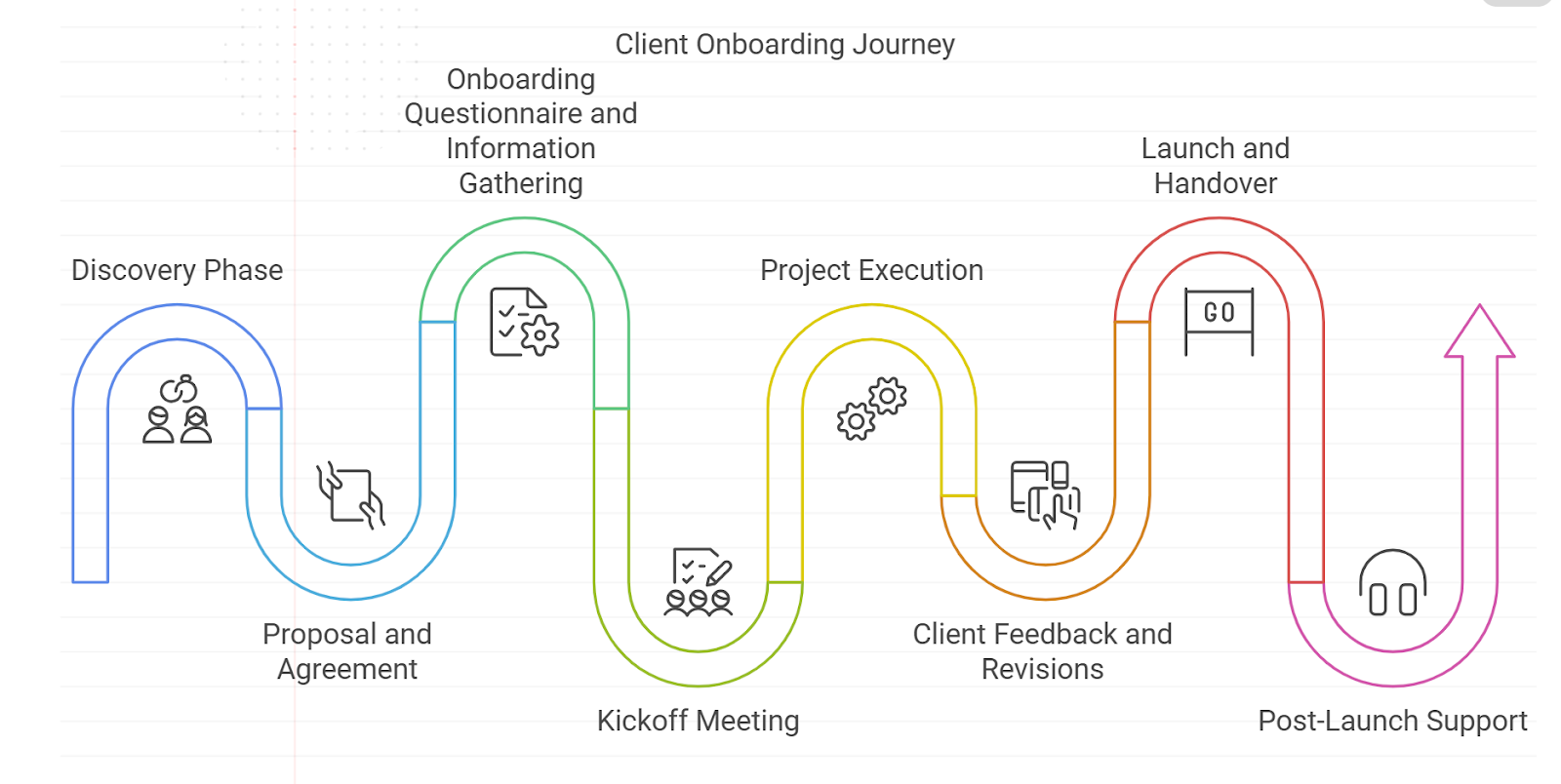
- Discovery Phase
Objective
Build rapport, understand the client’s needs, and set expectations.
Actions
- Initial Inquiry: Client fills out a contact form on the website or contacts you directly via email/phone. Include key details like their business goals, project scope, budget, and timeline.
- Consultation Call/Meeting: Conduct a discovery call or in-person meeting. Discuss the client’s business, target audience, branding needs, and technical requirements.
- Send Welcome Pack: Provide a detailed welcome pack that outlines the onboarding process, introduces your team, and sets expectations.
Proposal and Agreement
Objective
Align on services, timelines, and deliverables, and formalize the agreement.
Actions:
Customized Proposal: Based on the discovery call, create a proposal that covers:
- Web design (e.g., platform choice, features)
- Community management (e.g., platform management, engagement strategies)
- Graphic design (e.g., logo, marketing assets)
- Clear pricing and timeline for each service.
Agreement and Contract: Once the proposal is accepted, send an official contract. Ensure it outlines payment terms, deliverables, and timelines.
Deposit: Secure a deposit to kick off the project (if applicable).
Onboarding Questionnaire and Information Gathering
Objective:
Collect necessary materials and preferences from the client to begin work.
Actions:
- Detailed Questionnaire: Create an onboarding form for the client to fill out. This may include:
- Website style preferences, color schemes, and design inspirations
- Branding guidelines (if they have them)
- Social media accounts and content strategies for community management
- Any current branding materials (logos, graphics, etc.)
- Access to CMS platforms or hosting services (for web design)
- Content for the website (copy, images, videos)
| Questionnaire | Description | Link to questionnaire |
| Website questionnaire | Covers website style preferences and design inspirations and any current branding materials | Website questionnaire |
| Graphics Design questionnaire | Covers branding guidelines, any current branding materials | Graphics design questionnaire |
| Community Management questionnaire | Covers Social media accounts and content strategies for community management | Community Management questionnaire |
- Project Execution
Kickoff Meeting
Objective
Confirm the project details and ensure everyone is on the same page.
Actions:
- Discuss Project Scope: Go over the specific tasks, deliverables, and timeline.
- Set Up Communication Channels: Decide how you’ll communicate (email, WhatsApp).
- Content Collection: Clarify any additional content needed and confirm deadlines for submission.
- Design Brief Review: If you’re working on graphic design or web design, finalize the brief and key design preferences.
3. Project Execution
Objective
Begin work and maintain transparency throughout the process.
Actions:
- Web Design: Begin designing the website, sharing progress with the client (wireframes, design mockups, etc.). Ensure the client is updated on milestones.
- Community Management: Set up social media accounts (if needed), develop community engagement strategies, and begin managing posts, comments, and engagement activities.
- Graphic Design: Create logos, banners, or other design assets. Share drafts for feedback and revisions.
- Weekly Check-Ins: Schedule brief check-ins with the client to ensure they are happy with the progress ( for communication guidelines please refer to the following documentation)
4. Client Feedback and Revisions
Objective
Ensure the client is satisfied with the direction of the project and address any necessary revisions.
Actions:
- Request Feedback: After presenting drafts or designs, ask the client for detailed feedback and suggestions for revisions.
- Revise Deliverables: Make necessary revisions based on the feedback and send updated drafts.
- Approval: Once the client is happy with the final design for the website, graphics, and community management strategy, get formal approval before launching.
5. Handover phase
Launch and Handover
Objective
Finalize the project and provide the client with the tools to maintain it.
Actions:
- Web Design Launch: If it’s a website, ensure it’s live and functioning properly. Provide training or guides on how to manage the site, if necessary. Create a backup of the project
- Community Management Transition: Provide the client with access to social media tools, content calendars, and guidelines for managing their community.
- Graphics Delivery: Ensure that all design files (logos, social media assets, etc.) are delivered in the required formats and they receive branding guidelines.
- Final Invoice: Issue the final invoice upon completion.
6. Post-Launch Support
Objective
Provide continued support and build long-term relationships.
Actions:
- Support Period: Offer post-launch support for a defined period to fix bugs, make adjustments, or address any issues
- Client Feedback: Ask for feedback on the entire onboarding experience and work done. Separate forms for web design, graphics design and community management
- Ongoing Maintenance and Updates: Set up a maintenance plan or retainer agreement for ongoing website updates, community management, or design work.
- Referral and Testimonial Request: After a successful completion, request a testimonial or a referral from the client.
7. Client Relationship and Retention
Objective
Keep the client engaged and encourage repeat business.
Actions:
- Quarterly Check-Ins: Periodically check in with the client to offer updates on industry trends or service upgrades.
- Exclusive Offers: Provide discounts or promotions for additional services, like new design updates, social media campaigns, or expanded community management.
- Newsletters/Emails: Keep the client informed of any new offerings, tips, or updates related to their services.
